
What is resilience?
The strength that carries us



Resilience describes the ability to cope with crises, pressure and change without giving up on ourselves – and to emerge from them stronger. The term originally comes from physics, where it describes a material’s ability to return to its original shape after being deformed. Applied to people, resilience means the inner strength that helps us process setbacks, master challenges and remain able to act, even in difficult times.
Resilience can be learnt and deliberately strengthened – on a physical, mental, emotional and spiritual level. These four dimensions are interlinked and together form a stable foundation that helps us through difficult situations. Like an anchor we cast in order to find calm.
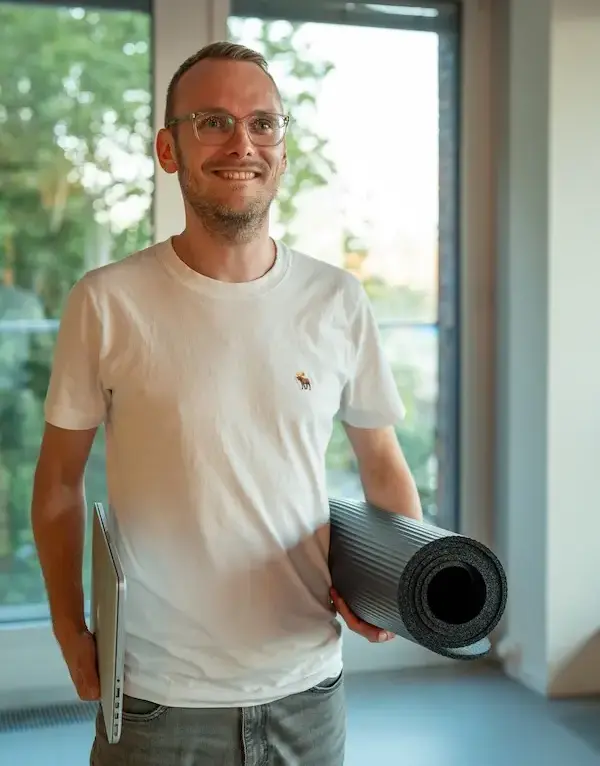
Physical resilience
The body is the foundation for everything. When we are physically exhausted, we have little strength left to stay mentally or emotionally stable. Physical resilience means taking care of your body and giving it the resources it needs to withstand pressure.
This includes:
A resilient body is like a well-filled reservoir – it stays stable and you can rely on it, even when everyday life, or life in general, gets difficult.
Mental resilience
Mental resilience describes the ability to deal constructively with your thoughts, beliefs and way of thinking. It is about seeing challenges not as insurmountable obstacles, but as problems that can be solved.
Key elements are:
What sets mentally resilient people apart is not that they never have doubts, but how optimistically they deal with those doubts.
Emotional resilience
Emotional resilience is the ability to perceive, accept and regulate your feelings without being overwhelmed by them. It is about finding and developing a healthy, constructive way of dealing with your own negative emotions.
This means:
Those who know and understand their emotions don’t lose their footing in a crisis.
Spiritual resilience
Spiritual resilience goes beyond rational and emotional perception. It concerns the deeper level of meaning, values and inner connectedness. People with strong spiritual resilience draw strength from something greater than the moment – be it a belief in a higher purpose, firm values or a spiritual anchor.
Important aspects are:
Spiritual resilience is often what sustains people in the long term when their physical, mental and emotional strength reaches its limits.

Resilience as an interplay
Physical, mental, emotional and spiritual resilience are mutually dependent. A strong body supports a clear mind. A clear mind helps us make sense of our emotions. And a stable inner attitude gives the whole a firm hold and a sense of direction.
Strengthening resilience does not mean becoming invulnerable. It means staying in touch with life’s challenges – and finding your own strength, flexibility and inner stability again and again.